


It’s the little things…
In all the places I’ve been to over the course of my career, I’ve noted a few commonalities among aq...







Many of the pioneers in modern aquaculture, and many of those who came behind them in successive waves over the following decades, have left us in recent months and years. This, unavoidably, creates something of an information gap.
Nonetheless, I have confidence that much of their wisdom and insight will live on in those who follow …but probably not all of it. This article’s topic is “grey literature.”
Yes, grey literature is a thing. In fact, it is such a valuable thing that there are international scholarly conferences focusing on the category. At the 1997 and 2004 International Conference(s) on Grey Literature, the following definition of these resources was adopted: “information produced on all levels of government, academia, business and industry in electronic and print formats not controlled by commercial publishing.”
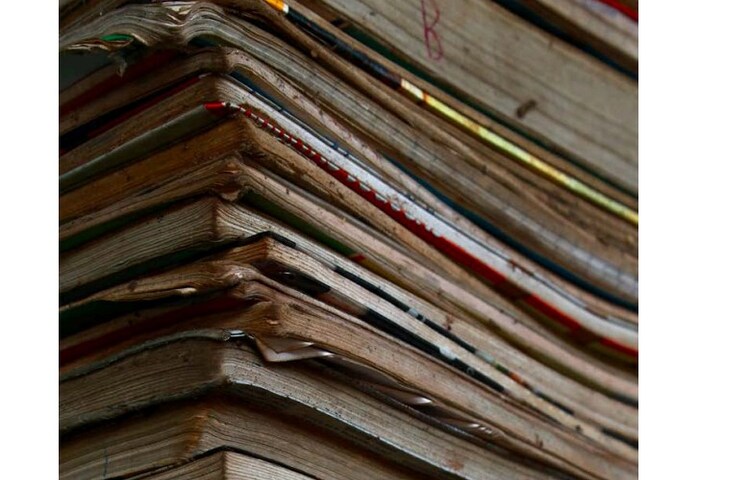
Some examples of grey literature in the field of aquaculture include extension manuals, newsletters and factsheets, conference papers and proceedings, dissertations and theses, government documents and reports, market reports, industry association newsletters, educational or promotional pamphlets, and research reports.
Aquaculture-related grey literature has also found its place in the digital age, in the form of blogs, wikis, how-to videos, discussion fora and email list groups, but the category has diminished in recent years. Of course, not all grey literature can be considered to convey objective and authoritative information. The same can be said, increasingly, for many academic journals – especially recently established ones.
Most of the grey literature produced over the past century was never formally published. The vast majority of those materials were paper documents, and much of what was produced and disseminated over those many decades has been lost to fire, water damage, destructive insects, or simply an uncontrollable impulse to free up storage space. As a result there is a less noticeable, but equally significant, information gap progressing in our discipline and many others.
Much of the early research in our field is now difficult to access or impossible to even locate. Although services such as JSTOR have simplified access to many older journals, in the early years of modern aquaculture science the most significant information was often found in bulletins, extension manuals and conference proceedings. Several decades passed before many publishing companies deemed aquaculture important enough to warrant an investment, so grey literature was pretty much all we had to work with. Even today, in many instances, not everyone is able to publish in peer-reviewed journals.
As we are buried deeper each day under the tsunami of digital information, the risk of failing to preserve our grey literature, let alone make this information widely accessible, increases. Some libraries are striving to digitize these materials and make them available through online literature searches, but the task seems to be increasingly difficult, with little economic incentive in most cases. The process involves document preparation, digitization, editing, creating specific metadata, content validation and, ultimately, uploading to repositories or the Cloud.
The question of copyright can complicate the process in some instances, but the dissemination of these digital documents is usually no more complicated than it would be for physical holdings.
Finding grey literature on specific topics can be a daunting task. But the digital age has made things a bit easier in recent years. A search should include databases, online repositories, internet search engines (including archive machines like Wayback ), organization websites, and good old-fashioned library catalogues.
In our field, an understanding of the latest developments will always be important. But the same can be said for historical, foundational knowledge. As I review grant proposals, research budgets and even theses and dissertations, I am amazed and troubled by the number of academics who are totally unaware of important and highly relevant research published decades earlier in refereed journals. Sadly, the wealth of knowledge in grey literature relegated to old filing cabinets and closets full of dusty boxes is even more troubling.
At the risk of repeating myself (for emphasis, not because I’m getting old), many libraries around the world are considering initiatives to digitize “outdated” information, especially in the realm of grey literature. So please don’t discard those old technical reports, government documents, proceedings, bulletins or extension manuals.
Try to find those treasures a new home where they can help advance our profession. The next generation of aquaculture researchers, producers and educators face enough challenges already without having to reinvent the wheel.
— C. Greg Lutz, Editor-in-Chief
C. Greg Lutz began his career in aquaculture as a Master’s student at Louisiana State University, where he was persuaded to stay on to subsequently earn his Ph.D. From there he went to work in the private sector, planning, constructing, outfitting and operating a 500 ha catfish farm. He eventually returned to the university as an Extension Specialist and Professor, where he currently has responsibility for all aquaculture programming in the state. The total impact of Louisiana’s commercial aquaculture in 2021 was $741 million. Dr. Lutz is the author of Practical Genetics for Aquaculture, as well as a number of refereed publications and book chapters, and over 320 extension/educational articles. To date he has worked in 25 countries.